Here is another book that has been added to The Cary Grant Collection!
"From the ashes of World War II, Rome was reborn as the epicenter of film, fashion, creative energy, tabloid media, and bold-faced libertinism that made “Italian” a global synonym for taste, style, and flair.
A confluence of cultural contributions created a bright, burning moment in history: it was the heyday of fashion icons such as Pucci, whose use of color, line, and superb craftsmanship set the standard for women’s clothing for decades, and Brioni, whose confident and classy creations for men inspired the contemporary American suit. Rome’s huge movie studio, Cinecittà, also known as “Hollywood-on-the Tiber,” attracted a dizzying array of stars from Charleton Heston, Gregory Peck, Audrey Hepburn, Ava Gardner, and Frank Sinatra to that stunning and combustible couple, Elizabeth Taylor and Richard Burton, who began their extramarital affair during the making of Cleopatra.
And behind these stars trailed street photographers—Tazio Secchiarioli, Pierluigi Praturlon, and Marcello Gepetti—who searched, waited, and pounced on their subjects in pursuit of the most unflattering and dramatic portraits of fame.La Dolce VitaDolce Vita Confidential"

Cary Grant is referenced a number of times in the publication as noted below.
Chapter 13 - "She's Impossible to Photograph" - Page 123: By the time she was twenty-nine years old, the child born Sofia Scicolone to an unwed mother from Naples had: changed her name twice; married and had her marriage anulled; miscarried a child; moved from Pozzuoli near Naples to Rome to Beverley Hills to Paris to Switzerland and then back to Rome; won prizes in beauty pageants; become a star of fotoromanzi; appeared topless in two movies; and accrued more than forty mainstream film credits, alongside such co-stars as Clarke Gable, John Wayne, Cary Grant (twice), Frank Sinatra, Alec Guinness, Peter Sellars, Alan Ladd....
Chapter 15 - Signor Sigarone - Page 145: Those stars and many others - Orson Welles, Lauren Bacall, Marlon Brando, Elizabeth Taylor, Cary Grant, Marlene Dietrich, James Stewart, Grace Kelly, Gary Cooper, William Holden most brightly among them - thronged through Rome's Ciampino Airport, conveniently located southeast of the city center on the route that took them right past Cinecitta.
Chapter 17 - "Florence is a Lost Cause" - Page 166: (Cary Grant took the bedazzled designer - Micol Fontana - for a moonlight ride in his convertible at the evenings end)
Chapter 20 - "Poor Starving Devils" - Page 226: listed among others who walked through Rome and were regularly photographed.
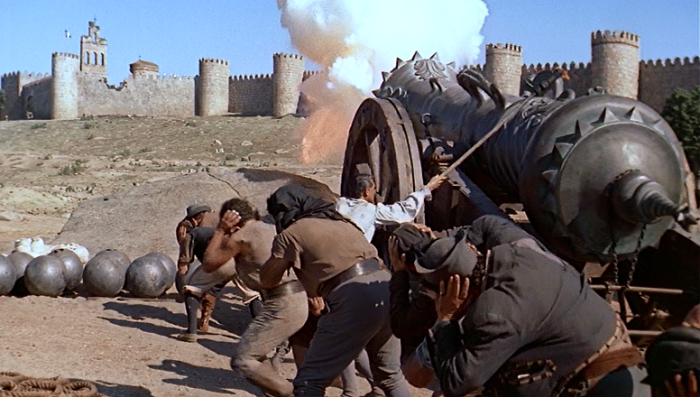
Chapter 25 - "I am not a Sexy Pot" - Page 313-314,315: Following Lollo, Sophia's first step on the path to Hollywood was familiar: an approach to a pretty girl by an American producer. But this pretty girl had a man who protected her interests and knew how the movie business worked and understood what her name, looks, and talent were truly worth. The American caller was writer-director Stanley Kramer, then working for United Artists on The Pride and the Passion, an epic about the Napoleonic Wars being shot in Spain. The film was to have starred Cary Grant, Marlon Brando, and Ava Gardner. But Brando dropped out and was replaced by Frank Sinatra, whose divorce from Gardner was still such a raw matter that there was no question of their working together. When Kramer inquired whether Sophia was available, Ponti knew he had the upper hand, but even he was surprised by the size of the offer that ensued: $200,000 firm-if her costars approved, and if her English was up to snuff. For the latter stipulation, Sophia embarked on a rigorous crashcourse under an English teacher named Sarah Spain, whom she adored but described as a persecutor.
As for the former, she simply showed up at a publicity event in Madrid a cocktail party press conference featuring Kramer and his stars and, predictably, won them over, particularly Grant, then married to histhird wife, actress Betsy Drake, but smitten like a schoolboy by his young costar Grant sent Sophia flowers daily, wooed her over romantic dinners at picturesque inns, told her repeatedly that his marriage was all over but for the paperwork. She was tempted, she would later admit, but despite her public persona, on-screen and off, and despite her ongoing relationship with Ponti. Sophia was an old-style respectable girl. She was admittedly overwhelmed by Grant's attentions and consquently watchful of her own words, behavior, and feelings. She wanted to honor her bond, both personal and professional, with Ponti. But it was a genuine challenge.
Drake got wind of her husband's activities and came to Spain to confront him, without taming his ardor one bit. She sailed home on, of all ships, the Andrea Doria, surviving its sinking off the coast of Massachusetts in July 1956 without the succor of her husband, who used the excuse of the film production to avoid returning home to ease her back from her brush with death. Ponti, too, hovered about the set, aware that Sophia was being lured but patient in his own way, which proved the right choice. When location shooting ended-early, because Sinatra had become restless in rural Spain, which he derided as "Windmillville"- Grant returned to Hollywood without Sophia.She, however, had made her entrée into Hollywood productions, and after signing a contract with Paramount, found herself cast opposite a dizzying array of famous costars in what looked like a willy-nilly selection of films.
She worked in Greece with Alan Ladd in Boy on a Dolphin (and caused a global sensation in a diving costume that clung to her like a layer of body paint), in Tunisia and Rome with John Wayne in Legend of the Lost, in London with William Holden and Trevor Howard in The Key, and in Hollywood and New York in a series of films that did almost no business: Desire Under the Elms with Anthony Perkins and Burl Ives: The Black Orchid with Anthony Quinn: That Kind of Woman with Tab Hunter and George Sanders; and Heller in Pink Tights, a western, of all things, directed by George Cukor. Only one of her films during this time was truly a hit either critically or commercially: Houseboat, again opposite Cary Grant, who was still pursuing her. Or, at least he was until he learned, in a newspaper, that she had chosen Carlo Ponti over him.

Page 320: (On winning the Oscar for best actress) Not one hour later, the phone rang. It was Cary Grant.
"Darling, do you know?"
"Know what?" she asked.
"Oh, darling! I am so glad I am the first one to tell you. You won!"
Dolce Vita Confidential by Shawn Levy is Book no.148 in The Cary Grant Collection by My Life in a Year with Archie.